

- BY bestadmin
- POSTED IN Blog
- WITH 0 COMMENTS
- PERMALINK
- STANDARD POST TYPE
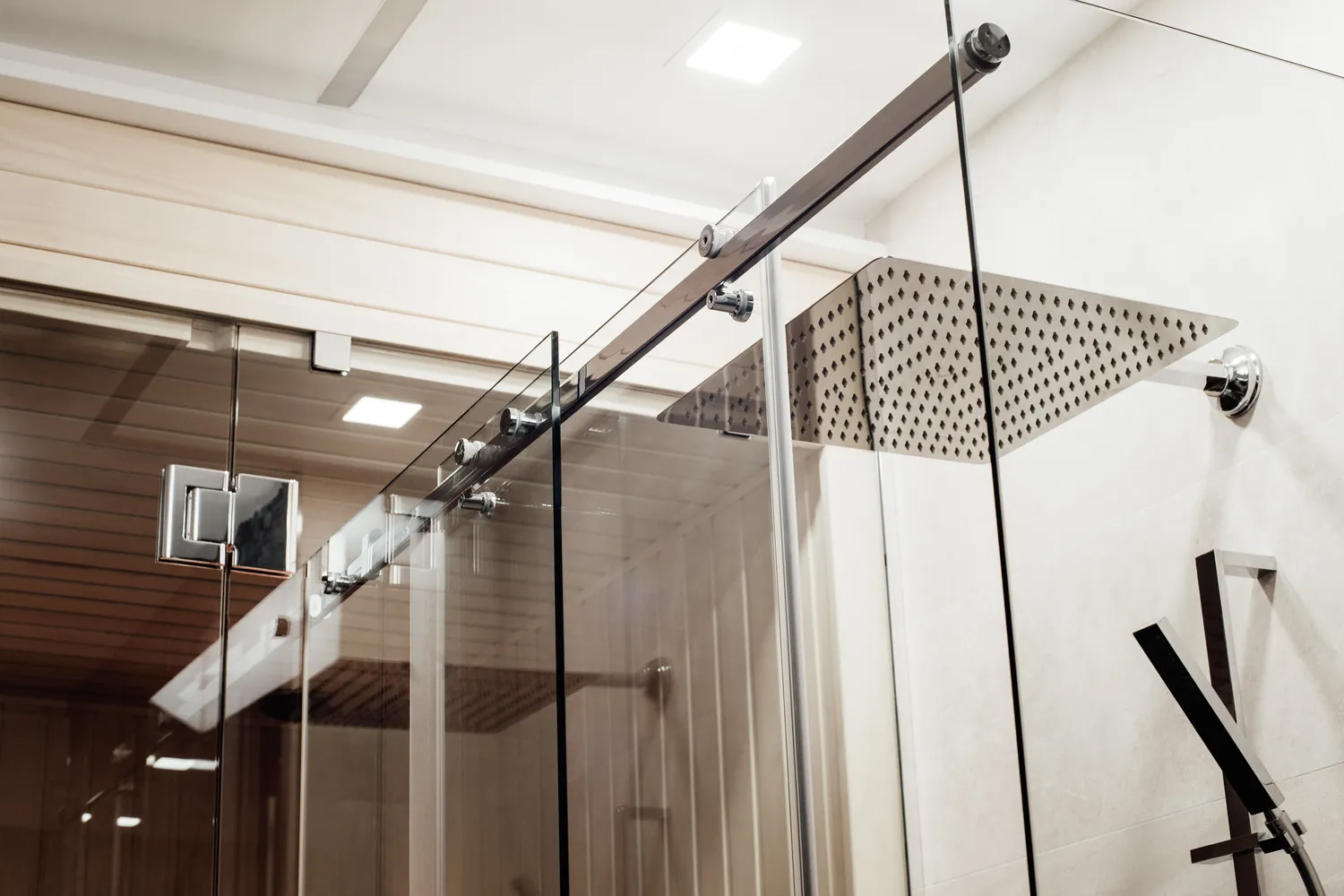
Two bathrooms can have exactly the same floor area, yet one feels cramped and the other feels open and calm. The difference is rarely square footage. It is how your brain reads the room. Designers have known this for decades, and a glass shower enclosure is one of the most effective tools they have. Here is why.
Your brain measures rooms with its eyes
When you walk into a room, you do not measure it. You estimate its size in a fraction of a second, using visual cues. Researchers who study spatial perception have found that we judge a room largely by how far our eyes can travel before they hit a barrier.
A solid wall or an opaque shower curtain stops your gaze. Your brain registers that point as the edge of the room. Clear glass does not. Your eyes pass straight through to the tile wall behind it, and your brain quietly adds that extra depth to its estimate. The room has not grown, but it feels as if it has.
People searching for glass shower doors near me Orland Park often start with a curtain or a heavily framed door. Replacing either with clear glass can make a small bathroom feel noticeably larger the moment you walk in.
Unbroken lines calm the eye
The second cue is visual continuity. Every edge, frame and color change gives your eye something to stop on. In a busy room, the eye keeps jumping from one boundary to the next, and the space reads as divided into smaller pieces.
That is why frameless glass has such a strong effect. Without metal tracks and thick frames, the tile flows from the bathroom floor into the shower without interruption. The same goes for walls: if the tile continues behind the glass, the eye reads it as one surface.
Designers use a few tricks to push this further:
- Run the same tile inside and outside the shower. One material reads as one space.
- Go curbless. A flush floor removes the last horizontal line dividing the room.
- Take the glass higher. Panels that reach close to the ceiling draw the eye upward and make the ceiling feel taller.
- Keep hardware minimal. Small clamps and slim hinges disappear from a distance.
Light is space
The third cue is brightness. Our brains tend to perceive brighter rooms as larger, and dim corners as closer and more enclosed. A shower curtain or frosted panel blocks light and creates a shadowy zone in the room.
Clear glass lets daylight from a window, or light from overhead fixtures, reach every corner. It also reflects a little of that light back, adding soft highlights that give the room a sense of depth. If you are researching glass shower doors near me Burr Ridge, pay attention to where your light comes from. A panel placed to let window light pass through can change the whole mood of the bathroom.
What about privacy?
Openness is not always the goal. In a shared bathroom, a fully clear enclosure can feel exposed. The good news is that you do not have to choose between privacy and space.
A few options balance both:
- Frosted band. A strip of acid-etched glass at mid-height hides the body but keeps sightlines open above and below.
- Rain or reeded glass. Textured patterns blur what is behind them while still letting light through.
- Partial panel. A single fixed panel in a walk-in shower shields the spray zone without enclosing the whole space.
Each one keeps most of the brightness and depth that make glass feel spacious. Homeowners looking into glass shower doors near me Bridgeview often choose a frosted band as the best of both worlds.
Color plays a quiet role too
Ordinary glass has a faint green tint caused by iron in the raw materials. You barely notice it on a thin window, but on a thick shower panel it can add a slight greenish cast, especially along the edges. Low-iron glass removes most of that tint, so white tile looks truly white and the glass nearly vanishes. It is a small detail, but in a small room, small details add up.
A quick experiment
Try this at home. Stand in your bathroom doorway and notice where your eyes stop. Then hang a sheet across the shower opening and look again. The room will feel noticeably smaller, even though nothing has moved. That instinctive shift is exactly what designers work with when they choose glass.
The takeaway
A bigger bathroom does not always require knocking down walls. By letting your eyes travel further, removing visual breaks and letting light reach every corner, a glass shower enclosure changes how your brain measures the room. The square footage stays the same, but the experience of the space does not.