

- BY bestadmin
- POSTED IN Blog
- WITH 0 COMMENTS
- PERMALINK
- STANDARD POST TYPE
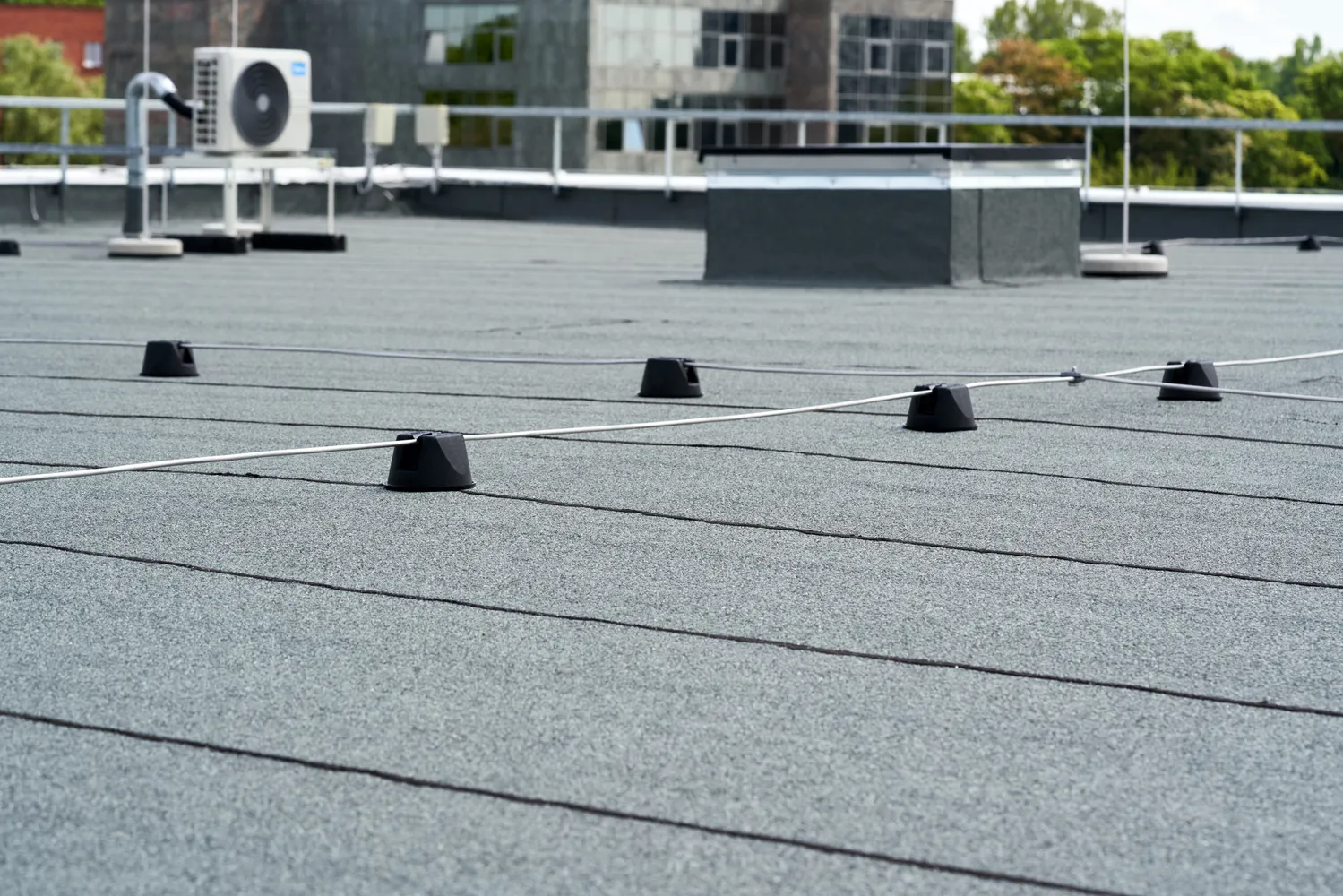
Heat-Welded Seams: How TPO and PVC Membranes Become One Continuous Sheet
A single-ply roof arrives on site as rolls of membrane, but it must perform as one continuous waterproof surface. The places where sheets meet are therefore the most critical part of the installation. Thermoplastic membranes such as TPO and PVC are joined by heat welding, a process that fuses overlapping sheets into a single piece of material.
Why Seams Matter So Much
The open field of a membrane is manufactured under controlled factory conditions, while seams are made on the roof in wind, sun and changing temperatures. A large roof can contain thousands of linear feet of seams, so even a small rate of defects can mean many potential leak points.
That is why seam quality comes up in almost every discussion of thermoplastic roofs. Owners reviewing proposals, including those who started with a search for flat roofing contractors near me St Charles, will often see seam testing and inspection described in the specification.
How Hot-Air Welding Works
Thermoplastic materials soften when heated and harden again as they cool. Hot-air welding takes advantage of this. A nozzle directs hot air between the overlapping sheets, melting the surfaces that face each other, and a roller immediately presses them together. As the material cools, the two sheets become one.
Three variables must be balanced: air temperature, travel speed and pressure. Too little heat or too fast a pass produces a weak bond. Too much heat or too slow a pass can scorch the membrane or thin it at the seam. The right combination depends on the membrane type and thickness as well as the conditions on the roof.
Automatic Welders and Hand Welders
Long, straight field seams are usually welded with automatic machines. These self-propelled welders travel along the seam at a set speed and temperature, producing consistent results over long distances.
Details are a different matter. Corners, curbs, pipe penetrations, drains and wall flashings are welded with handheld hot-air tools and small silicone rollers. Hand welding demands skill and attention, because the operator controls heat and pressure by eye and feel. Not surprisingly, many seam problems are found at these detail areas.
Test Welds and Daily Adjustments
Because conditions on a roof change throughout the day, standard practice is to make test welds before production welding begins. A short sample seam is welded, allowed to cool, and then pulled apart by hand. In a sound weld the membrane itself tears or the reinforcing scrim is exposed, rather than the seam simply separating.
Test welds are commonly repeated whenever conditions shift: after breaks, when temperatures rise or fall significantly, when the work moves from sun into shade, or when wind picks up. Power supply matters too, since voltage fluctuations from generators can change a welder’s heat output. Anyone comparing quality-control plans after searching for flat roofing contractors near me Batavia may notice that thorough specifications spell out exactly when test welds are required.
Probing and Inspecting Finished Seams
Once seams have cooled, they are typically checked with a seam probe, a blunt metal tool drawn along the edge of the seam. If the probe slips into the seam, it has found a void or an unbonded section that needs repair. Many manufacturers require probing of all seams, often at the end of each working day.
Visual inspection supports probing. Inspectors look for consistent weld width, signs of scorching, and the small bead of melted material along the seam edge that often indicates good flow. Manufacturers typically specify a minimum weld width, and areas falling short are repaired before the roof is accepted.
Common Welding Defects
Most seam problems fall into a few categories:
- Cold welds: too little heat or too much speed, producing a seam that looks closed but peels apart easily.
- Overheated welds: scorched or thinned material that may crack over time.
- Contamination: dirt, moisture or surface residue that prevents fusion. Weathered membrane usually needs cleaning before new material can be welded to it.
- Wrinkles and fishmouths: gaps created when sheets are not laid flat before welding.
T-joints, where three layers of membrane meet, deserve special attention. On thicker membranes, the step created by the overlapping sheets can leave a small channel, and many manufacturers require a cover patch at these intersections. Contractors found through a search for flat roofing contractors near me Aurora or elsewhere will generally follow the manufacturer’s detail requirements here, since warranties often depend on them.
Conclusion
Heat welding is what allows thermoplastic membranes to function as a single waterproof surface. Its reliability depends on balancing temperature, speed and pressure, adjusting to changing conditions with test welds, and verifying every seam through probing and inspection. Unlike adhesive-based seams, a properly welded thermoplastic seam is essentially continuous with the sheet itself, which is a large part of why these membranes have become so widely used on commercial roofs.